Can Pearls Get Wet?
Yes, pearls can get wet. Brief contact with water, like rain, a splash while washing your hands, or wiping with a damp cloth, generally won’t harm them. What pearls shouldn’t do is soak or be worn in the shower, pool, ocean or hot tub. The main risks come from how long the pearls stay wet and what’s in the water, rather than from water itself.
This guide is for anyone who wears pearls regularly and wants to know what to do when they get wet. It’s especially useful for owners of strung necklaces and bracelets, travelers, and anyone whose pearls have been caught in the rain or accidentally worn in water.
| Situation | Is it safe? | What to do |
|---|---|---|
| Caught in the rain | Generally yes | Pat dry with a soft cloth when you get home |
| Washing your hands | Usually fine | Keep soap off the pearls; pat dry if splashed |
| Wiping with a damp cloth | Yes | Let pearls air dry fully afterward |
| Showering | Not recommended | Remove pearls first |
| Swimming pool or hot tub | Not recommended | Remove pearls; chlorine is harsh on pearls |
| Ocean swimming | Not recommended | Remove pearls; salt water and sand add risk |
| Accidental soaking | Needs attention | Follow the drying steps below |
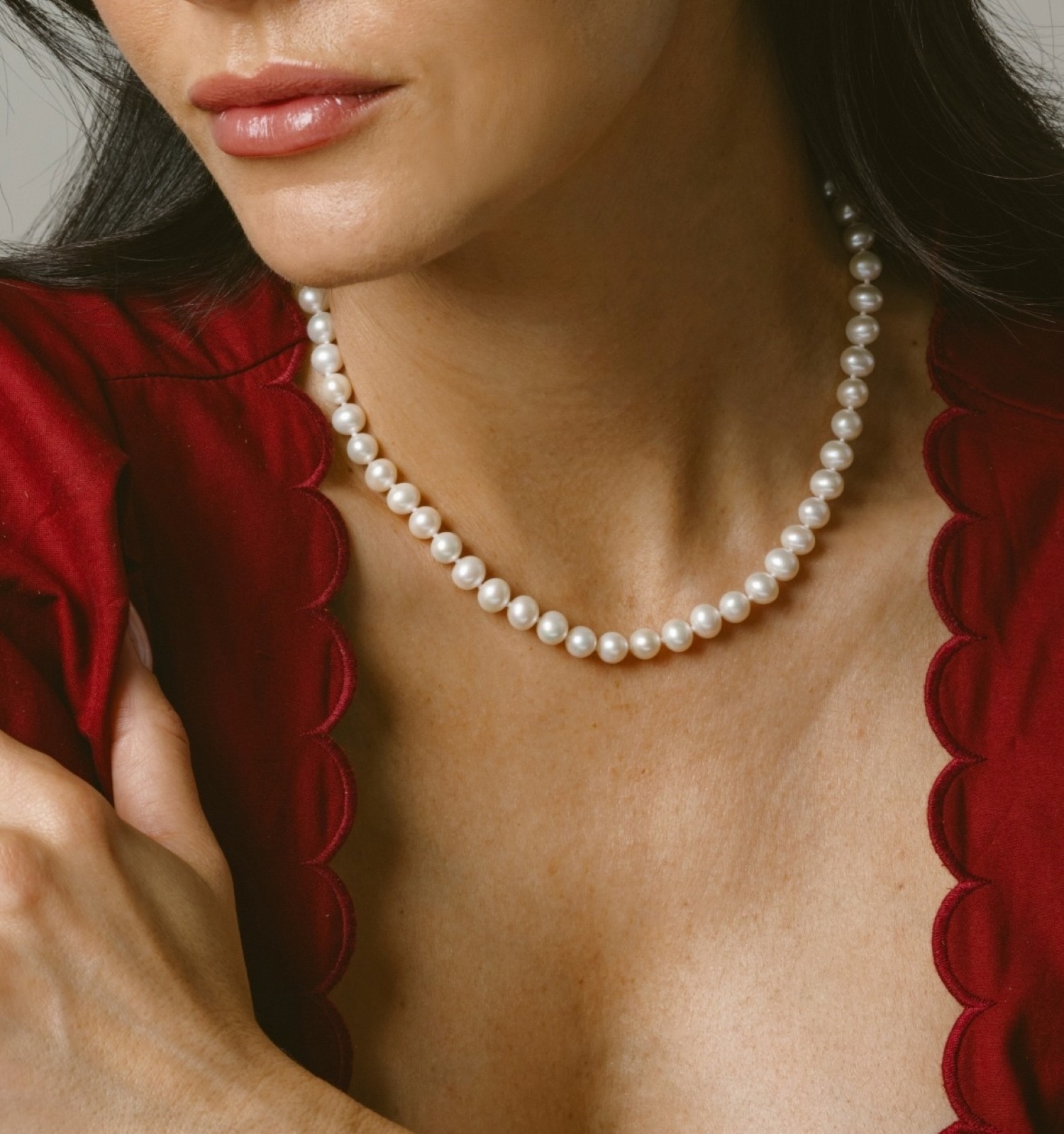
Pearl studs and pendants are among the easiest pieces to wear and care for day to day. Browse our pearl stud earrings and pearl pendants.
The difference between a splash and a soak is the most important thing to understand about pearls and water. A few drops on the surface can be patted away before they cause any problems, which is why a lightly damp cloth is a standard way to clean pearls. Brief contact dries quickly and leaves little behind.
Soaking is different. When pearls sit in water, or are worn in the shower or pool, moisture has time to reach the silk thread, the knots and, in many earrings, the adhesive that holds the pearl on its post. Water in a shower, pool or ocean also carries soap, chlorine, salt or sand, which are harder on pearls than plain water.
Most fine pearl necklaces and bracelets are strung on silk and knotted between each pearl. Silk absorbs water, and a wet strand can stretch, especially if it’s hung while damp. Repeated soaking can also weaken the thread over time, so a strand that often gets wet may need restringing sooner.
The thread and knots can also take longer to dry than the pearls themselves. A strand can feel dry to the touch while the silk is still damp. Storing it too soon can shorten the thread’s life, so strands need more drying time than loose pearls or earrings.
Rain is generally fine for pearls. When you get home, gently pat them with a soft, dry cloth and let them finish air drying before you put them away. If a strand was thoroughly soaked in a heavy downpour, follow the full drying steps below.
Pearl rings and bracelets will occasionally get splashed. A little clean water isn’t a concern, but soap residue can build up on the surface. Remove rings and bracelets before washing when you can, and pat them dry if they get wet.
Pearls should come off before you shower. Shampoo, conditioner and body wash can leave residue on the pearl surface. Daily exposure to water also puts repeated strain on silk thread and earring adhesive.
Chlorine is harsh on pearls, so remove all pearl jewelry before swimming or using a hot tub. If pearls do end up in chlorinated water, wipe them with a soft cloth dampened in fresh water to remove residue, then follow the drying steps.
Ocean water adds salt and sand to the mix. Pearls are relatively soft, so sand can scratch the surface, and a soaked strand faces the same thread risks as in any other water. Take pearls off before going in. If they get wet, wipe them with a fresh-water-dampened cloth and dry them fully.
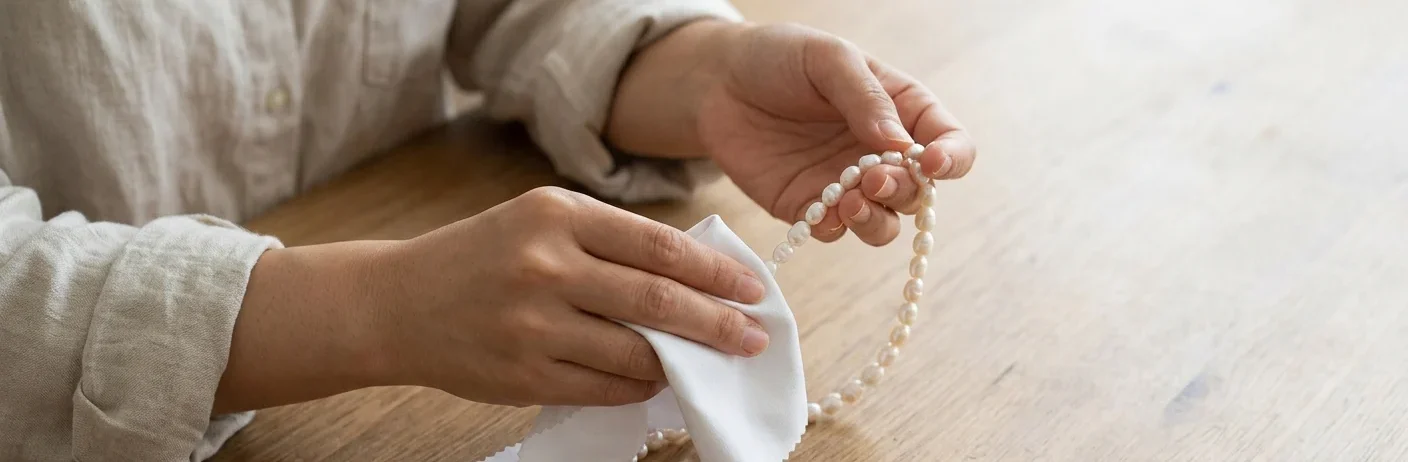
A soft cloth lightly dampened with lukewarm water is one of the safest ways to clean pearls. The cloth should be damp, not wet, so the pearls get only surface moisture. Afterward, let them air dry fully before storing.
If your pearls have been soaked in the shower, pool, ocean or a heavy rainstorm, follow these steps:
Most brief exposure needs nothing more than drying. A professional check is worth it if a strand now looks longer or has gaps between the pearls. The same goes if knots look loose or the thread is discolored, or if a pearl feels loose on an earring post or pendant setting. A jeweler can restring the strand or secure the setting before any pearls are lost.
A brief splash of clean water is unlikely to harm pearls. What matters more is what the water contains and how long the thread stays wet. Pat away a little rain with a soft cloth. If a strand has been through a shower or swim, lay it flat and wait until the pearls, knots and thread are completely dry before wearing or storing it.
Generally, yes. Rain is unlikely to harm pearls. Pat them dry when you get home and let them air dry before storing.
It’s best not to. Shampoo and soap can leave residue, and regular exposure to water can weaken the adhesive that holds many pearls on their posts.
The silk thread can absorb water and stretch. Lay the necklace flat on a dry towel and wait until the pearls, knots and thread are completely dry before wearing or storing it.
Salt water and sand can affect the pearl surface and the thread. Remove pearls before swimming in the ocean, and wipe them with a fresh-water-dampened cloth if they get wet.
Yes, with a soft cloth lightly dampened with lukewarm water. Avoid soaking, and let pearls air dry fully afterward.
Brief contact with water is generally safe for pearls, but soaking isn’t. The biggest risks come from soap, chlorine, salt and sand, and from silk thread or earring adhesive staying wet for too long. If pearls do get soaked, remove any residue, pat them dry, lay strands flat and let everything dry completely before wearing or storing.
Written by:
Katie Muirhead
Content & Editorial
The Pearl Source