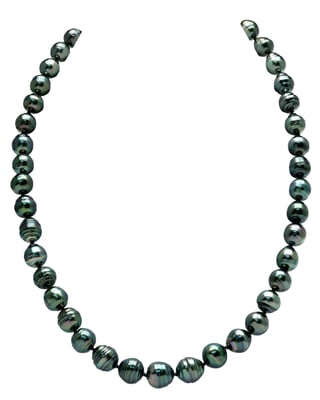
Tahitian vs. White and Golden South Sea Pearls: Which Should You Choose?
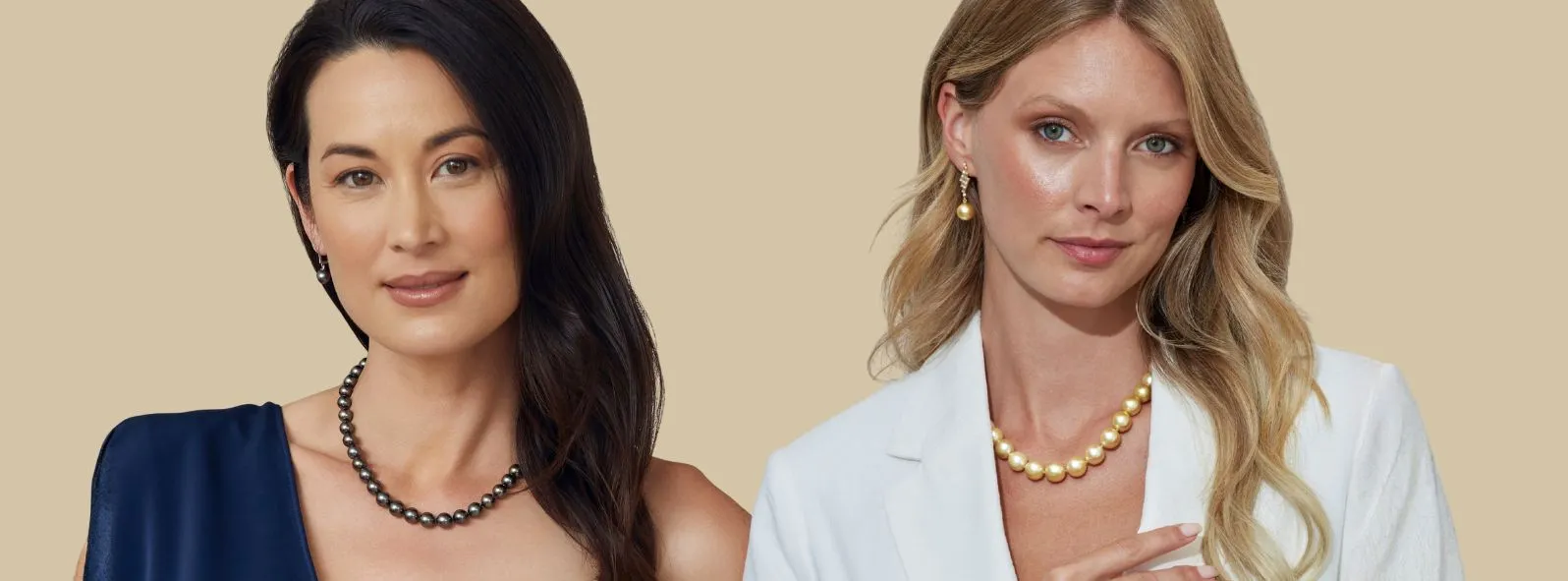
Tahitian pearls and South Sea pearls are both large, saltwater cultured pearls, but they look very different. Tahitian pearls are naturally dark, with gray, black, green and purple tones. White and golden South Sea pearls are light, larger on average and have a softer, satin-like glow. The right choice usually comes down to the color you want to wear, how large you want the pearls to look, and the jewelry style.
This guide is for anyone deciding between a dark Tahitian pearl and a white or golden South Sea pearl. That includes buyers choosing a first luxury pearl, shoppers comparing product listings, and gift buyers deciding between classic white and something more distinctive.
| If you want… | Choose | Why |
|---|---|---|
| A dark, distinctive pearl | Tahitian | Among the major cultured pearl types, Tahitian pearls are known for naturally dark body colors |
| Visible overtones like green, blue or purple | Tahitian | Overtones show clearly against a dark body color |
| Larger pearls, on average | White or golden South Sea | South Sea pearls are typically the largest of the major cultured pearl types |
| A classic bridal or heirloom look | White South Sea | White and silver tones suit traditional styling |
| A warm, statement color | Golden South Sea | Gold-lipped oysters produce yellow to orangy-yellow pearls, known in the trade as golden |
| A soft, satiny glow | White or golden South Sea | Thick nacre diffuses light gently |
| A sharp, reflective shine | Tahitian | High-quality Tahitian pearls often show crisp reflections |
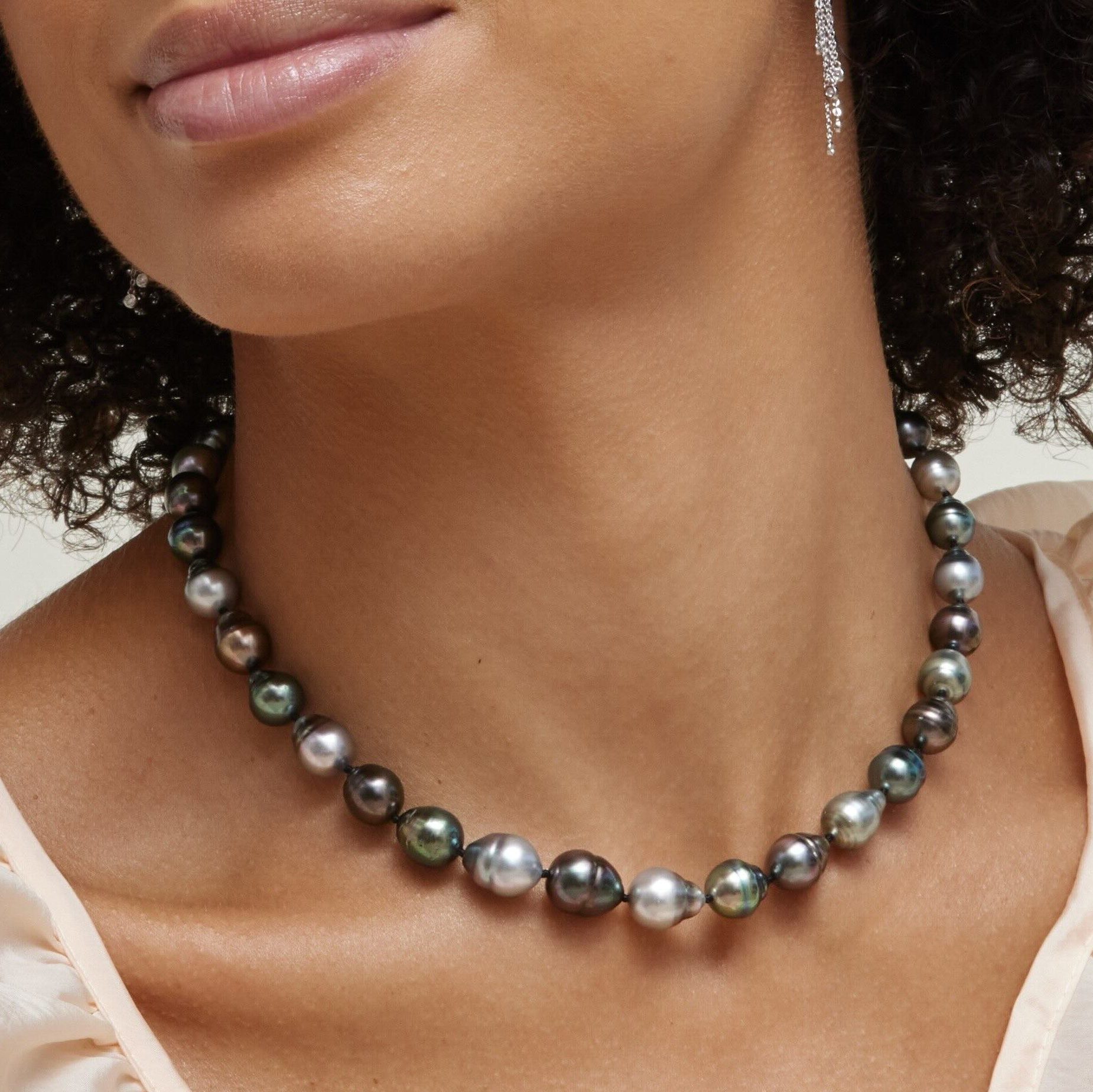
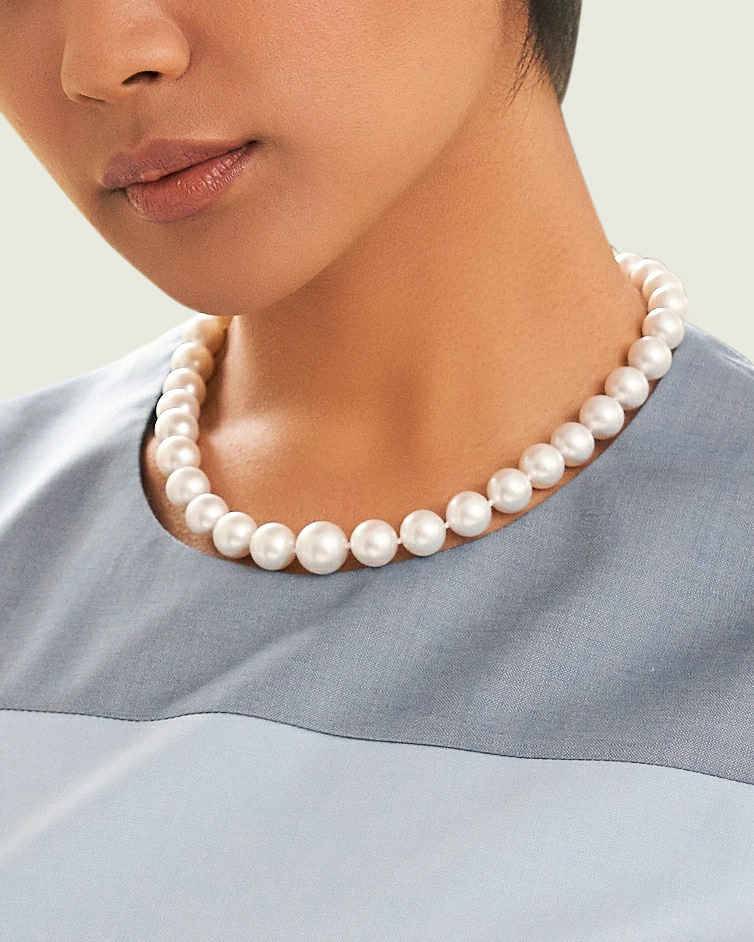
Some of our product titles use the name “Tahitian South Sea,” for example 8mm Tahitian South Sea Round Pearl Stud Earrings. The term reflects where Tahitian pearls are grown, in the South Pacific, but it doesn’t make them the same as white or golden South Sea pearls.
The two come from different oysters:
In this guide, “South Sea pearls” means pearls from Pinctada maxima.
Reading product titles: any product with “Tahitian” in its name, including “Tahitian South Sea,” contains Tahitian pearls with naturally dark colors. White and golden South Sea pearls are named by their color, such as white South Sea or golden South Sea.
| Name you may see | Pearl type | Oyster |
|---|---|---|
| Tahitian pearl, Tahitian South Sea pearl | Tahitian | Pinctada margaritifera (black-lipped) |
| White South Sea pearl | White South Sea | Pinctada maxima (silver-lipped) |
| Golden South Sea pearl | Golden South Sea | Pinctada maxima (gold-lipped) |
| Feature | Tahitian Pearls | White South Sea Pearls | Golden South Sea Pearls |
|---|---|---|---|
| Oyster | Pinctada margaritifera (black-lipped) | Pinctada maxima (silver-lipped) | Pinctada maxima (gold-lipped) |
| Where cultured | French Polynesia | Commonly Australia | Commonly the Philippines |
| Body color | Gray, silver, charcoal, near-black | White to silver | Yellow to orangy yellow (golden) |
| Overtones | Green, blue, purple, pink | Pink, blue, green | Varies |
| Luster | Often sharp and reflective | Soft and satiny | Soft and satiny |
| Typical size | About 9–14 mm (most often 9–11 mm) | About 8–20 mm (average around 13 mm) | About 8–20 mm (average around 13 mm) |
| Main value drivers | Size, overtone, surface, matching | Size, rarity, luster, surface | Color, size, luster, surface |
| Best suited to | Pendants, studs, multicolor strands, modern looks | Classic strands, bridal, heirloom pieces | Statement pendants, rings, warm-toned looks |
Luster describes how light reflects from a pearl’s surface. It looks different in these two pearl types. South Sea pearls have exceptionally thick nacre, which gives them a soft, satiny glow rather than a mirror-sharp shine.
High-quality Tahitian pearls often show a sharper, more reflective luster. Against a dark body color, that shine makes overtones more visible. Neither type is “better” here: the question is whether you prefer a gentle glow or crisp reflection.
Size is where South Sea pearls stand apart. South Sea pearls typically range from about 8 to 20 mm, with an average of around 13 mm. Tahitian pearls typically range from about 8 to 14 mm, and 9 to 11 mm is the most common.
In practice, a South Sea strand usually looks larger and more substantial than a Tahitian strand at a similar quality level. For studs and pendants, both types offer plenty of presence, so the choice often comes down to color rather than pearl size.
Both pearl types sit at the premium end of the market, but different things drive their value. South Sea pearls are usually the most expensive pearl type because of their size, rarity and longer cultivation. Tahitian pearls are valued for their natural dark colors, and less common overtones such as peacock can increase value.
Within either type, the same quality factors apply:
When comparing prices, make sure you’re comparing pearls of similar size and quality, since a small difference in millimeters or grade can change the price significantly.
Both pearl types work across most jewelry, but each has natural strengths.
“When customers are torn between Tahitian and South Sea pearls, I ask them which color they reach for in their wardrobe. Someone who wears a lot of black, navy or jewel tones often falls for Tahitian pearls, while someone who loves ivory, camel and warm neutrals usually gravitates toward white or golden South Sea.”
Compare Tahitian pearl jewelry, white South Sea pearl jewelry and golden South Sea pearl jewelry to find the color and size that suits you.
Tahitian pearls are sometimes called “black South Sea pearls” because they grow in the South Pacific. However, they come from a different oyster than white and golden South Sea pearls, and they look very different.
South Sea pearls are usually the more expensive of the two, mainly because of their larger size and rarity. Price within either type depends on size, luster, surface, shape and matching.
No. Genuine Tahitian pearls are naturally dark. Other pearl types sold as black, such as dark Akoya or freshwater pearls, are dyed.
White South Sea pearls suit traditional bridal styling best. Tahitian and golden South Sea pearls are good choices for a more distinctive or contemporary look.
Yes. Mixed strands combining dark Tahitian, white South Sea and golden South Sea pearls are a popular way to enjoy all three colors in one piece.
Tahitian pearls are the choice for natural dark color, visible overtones and a sharper shine. White and golden South Sea pearls offer larger sizes and a soft, satiny glow in classic white or warm gold. Decide on color first, then compare size, luster and surface within that type.
Written by:
Katie Muirhead
Content & Editorial
The Pearl Source
Reviewed by:
Lauren Greenberg
GIA-Certified Pearl Expert
The Pearl Source